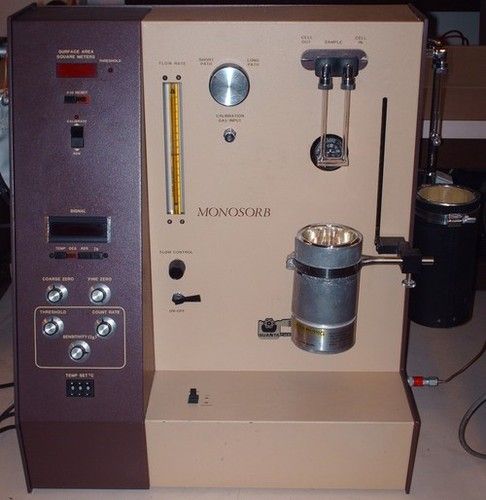
Microbiological Analysis

Microbiological Analysis

Product Details:

  • Measuring Range Up to 1000 CFU/ml
  • Size Standard
  • Interface User-friendly digital interface
  • Material Plastic and Stainless Steel
  • Temperature 5C to 50C Operating Range
  • Power 15 Watts
  • Display Digital
  • Click to view more
X

Microbiological Analysis Price And Quantity

  • 1 Unit
  • Audio-Visual indications for workflow status
  • Colony count, turbidity, and spread plate methods
  • 2%
  • Up to 85% RH non-condensing
  • Auto and manual calibration supported
  • Multiple samples simultaneous analysis
  • Rugged, easy-to-clean housing
  • UV and Heat-based sterilization enabled
  • USB, Printer, Cloud compatible

Microbiological Analysis Product Specifications

  • Standard
  • Up to 1000 CFU/ml
  • Plastic and Stainless Steel
  • User-friendly digital interface
  • Digital
  • 15 Watts
  • 5C to 50C Operating Range
  • Microbiological laboratory testing, identification and enumeration of microorganisms
  • 230 V AC
  • Lightweight
  • Electric
  • 50 Hz
  • Audio-Visual indications for workflow status
  • Colony count, turbidity, and spread plate methods
  • 2%
  • Up to 85% RH non-condensing
  • Auto and manual calibration supported
  • Multiple samples simultaneous analysis
  • Rugged, easy-to-clean housing
  • UV and Heat-based sterilization enabled
  • USB, Printer, Cloud compatible

Microbiological Analysis Trade Information

  • Cash on Delivery (COD), Cash Advance (CA), Telegraphic Transfer (T/T), Cash in Advance (CID), Cheque
  • 1000 Unit Per Month
  • 4-10 Days
  • Asia, Australia, South America, Western Europe, Middle East, Central America, Eastern Europe, North America, Africa
  • All India

Product Description

 MICROBIOLOGICAL ANALYSIS

Textile Material


Antibacterial activity of fabrics assessment of textile materials- Parallel Streak Method

[ AATCC-147-2004 ]


Antibacterial Finishes on textile materials

[ AATCC-100-2004 ]


Determining the Antimicrobial activity of Immobilized Antimicrobial agents under

Dynamic contact conditions

[ASTM: E2149-01 ]


Evaluation of Antibacterial activity of textile Materials: Agar Diffusion Plate Test

[ ISO 20645-2004 ]


Testing of antibacterial activity and Efficacy on Textile products

[ JIS L 1902:2002 ]


Determination of population of Microorganism on Product

[ IS; ISO/FDIS 11737-1; Part 1; 2005 ]


Mosquito Repellency

[ U.S. Patent 5,198,287 ]


Mosquito Repellency

[ Modified WHO/CTD/WHO - PES/IC/96.1 ]


Assessment of Dust Mite Properties of Textiles

[ AATCC Test Method Draft 5, Jan 2005 ]


Assessment of Antifungal Activity of Textile Materials

[ MIL-STD-810F Method 508.5.1-12 January 2000 ]


Assessment of Antifungal Activity of Textile & other Materials

[ AATCC Test Method 30 III ]


Non Textile Material such as Plastic Glazed Surfaces


Antimicrobial Products- Test for antimicrobial activity and Efficacy

[ JIS Z 28.1-2000 ]


Polymeric Materials


Determining Resistance of Synthetic Polymeric Materials to Fungi

[ ASTM: G-21 ]


Any Surface or Material Contaminated with Microbes


Identification of Pathogenic Bacteria/ Fungi / Protozoa, Cysts

[ Bergys Manual of Determinative Bacteriology, 2000; ASM Manual ]


Chemicals / Any Antimicrobial Formulations


Minimum Inhibitory Concentration (MIC) for any one organism; Tube Method

[ ASM Methods ]


Minimum Bactericidal Concentration (MBC) for any one organism; Plate Method

[ ASM Methods ]


Antifungal Activity by Plate Method

[ ASM Methods ]


Time Kill Test using Bacteria, Fungi & Algae

[ API RP-38 Method 2002 ]


Preservative Effectiveness for organisms - Preservative Challenge Test

In Vitro Cytotoxicity Test. This test is done on Mouse Kidney Cell Line L929.

It can be done Qualitatively and Quantitatively. Quantitatively can be done by

MMT Assay. Test Method is EN ISO 10993-5:2009


Paints

Resistance to growth of mold on the surface of interior paint coatings in an

environmental chamber (Evaluation of Antifungal activity of paint samples on applied surfaces)

[ ASTM D 3273-05 ]


Evaluating Degree of Surface Disfigurement of Paint Films by Microbial Growth

(Fungal or Algal) on soil & Dirt Accumulations

[ASTM D 3274-2002 ]


To assess the performance of in-can Oxford Cylinder cup Preservatives;

Qualitative method bioassay


To assess the performance of preservative Filter Paper Method in exterior paint;

Qualitative method


Water Samples - Drinking Water/ Swimming Pool water


Total Plate Count [ IS 1622 - 1981 ]


Enumeration of coliforms by MPN Method [ IS 1622 - 1981 ]


Enumeration of coliforms by Membrane Filter Assembly [ IS 1622 - 1981 ]


Enumeration of Escherichia coli by MPN Method [ IS 1622 - 1981 ]


Enumeration of Clostridium welchii [ IS 1622 - 1981 ]


Faecal Streptococci [ IS 1622 - 1981 ]


Food Samples Cereals, Pulses & Cereal Products, Herbs, Spices & Condiments,

Canned & Processed Food, Milk & Dairy Products, Fruit & Fruit Products,

Animal Feeds


Total Bacterial Count

[ IS 5402: 2002 / ISO 4833:1991 / Reaffirmed 2007 ]


Total Yeast & Mould Count

[ IS 5403: 1999, Reaffirmed 2005 / Reaffirmed 2009 ]


Enumeration of Coliforms

[IS 5401 (Part 1): 2002 / ISO 4832 : 1991 / Reaffirmed 2007 ]


Detection & Identification of Escherichia coli

[IS 5401 (Part 1): 2002 / ISO 4832 : 1991 / Reaffirmed 2007 ]


Enumeration of Escherichia coli by Plate Method

[IS 5401 (Part 1): 2002 / ISO 4832 : 1991 / Reaffirmed 2007 ]


Enumeration of Escherichia coli by MPN Method

[IS 5401 (Part 1): 2002 / ISO 4832 : 1991 / Reaffirmed 2007 ]


Detection of Salmonella

[IS 5887 (Part 3): 1999 / ISO 6579 : 1993 / Reaffirmed 2009 ]


Detection of Shigella

[IS 5887 (Part 7): 1999 / Reaffirmed 2009 ]


Detection / Enumeration of S.aureus by Plate Method

[IS 5887 (Part 2): 1999 / Reaffirmed 2009 ]


Enumeration of Faecal Streptococci by Plate Method

[IS 5887 (Part 2): 1999 / Reaffirmed 2009 ]


Enumeration of Faecal Streptococci by MPN Method

[IS 5887 (Part 2): 1999 / Reaffirmed 2009 ]


Enumeration & Confirmation of Bacillus cereus

[IS 5887 (Part 6): 1999 / ISO 7932 / Reaffirmed 2009 ]


Detection / Enumeration of Clostridium perfringens

[IS 5887 (Part 4): 1976 / Reaffirmed 2009 ]


Enumeration of Pseudomonas aeruginosa

[IS 14843 : 2000 / ISO 13720 : 1995 / Reaffirmed 2009 ]


Detection of Vibrio cholerae

[IS 5887 (Part 5): 1976 / Reaffirmed 2009 ]


Detection of Listeria monocytogenes Part 1

[IS 14988 (Part 1) : 2001 / ISO 11290-1 : 1996 / Reaffirmed 2007 ]


Detection of Listeria monocytogenes Part 2

[IS 14988 (Part 2) : 2001 / ISO 11290-1 : 1996 / Reaffirmed 2009 ]


Simultaneous Sample Processing

Process multiple microbiological samples at once and improve laboratory efficiency. The systems capacity for handling several samples concurrently is particularly beneficial for midsize and large facilities seeking to reduce turnaround time and boost productivity without compromising reliability.


Sterilization and Contamination Control

Equipped with both UV and heat-based sterilization, this apparatus ensures minimal risk of cross-contamination between samples. This dual-method approach enhances safety and integrity by inactivating a wide range of microorganisms on contact surfaces.


Comprehensive Detection Methods

Select from colony counting, turbidity measurement, or spread plate techniques based on your specific laboratory needs. These standard, validated methods facilitate the identification and enumeration of microorganisms in various sample types, delivering accurate results every time.


User-Friendly Interface and Data Management

The digital interface is intuitive and allows seamless navigation of analysis options. Results and reports can be exported via USB, directly printed, or uploaded to the cloud, making data access, storage, and sharing both simple and secure.

FAQs of Microbiological Analysis:


Q: How is sterilization achieved in this microbiological analysis system?

A: Sterilization is accomplished through a combination of UV light and heat-based methods. This dual approach effectively sanitizes contact surfaces and internal components, minimizing contamination risks during multiple sample analyses.

Q: What detection methods does the system support for microbiological analysis?

A: The system supports colony count, turbidity measurement, and spread plate methods. These techniques allow for precise identification and enumeration of microorganisms, catering to a wide range of routine laboratory requirements.

Q: When should calibration be performed on this instrument?

A: Calibration can be carried out either automatically or manually. It is recommended to conduct routine calibration before each analysis day or after extensive use to maintain the accuracy of 2% as specified.

Q: Where is this system ideally used, and what are its primary applications?

A: This system is designed for microbiological laboratory settings, making it ideal for laboratories specializing in the testing, identification, and enumeration of microorganisms in food, water, environmental, and clinical samples.

Q: What benefits does the audio-visual alarm system offer?

A: The integrated audio-visual alarm system notifies users regarding workflow status, ensuring timely interventions and reducing human error during critical stages of analysis.

Q: Is the system easy to clean and maintain?

A: Yes, its housing is constructed from rugged plastic and stainless steel, which is easy to wipe down and disinfect, promoting hygiene and simplifying routine maintenance in demanding lab environments.

Q: How is data output managed, and what options are available?

A: Data output is flexible and can be managed via USB connection, direct printing, or secure cloud uploading, enabling easy access, documentation, and sharing of analytical results in compliance with modern laboratory standards.

Tell us about your requirement
product

Price:

Quantity
Select Unit

  • 50
  • 100
  • 200
  • 250
  • 500
  • 1000+
Additional detail
Mobile number

Email

Other Products in 'Instrumental Analysis' category


Back to top